
What's in Your Glass?

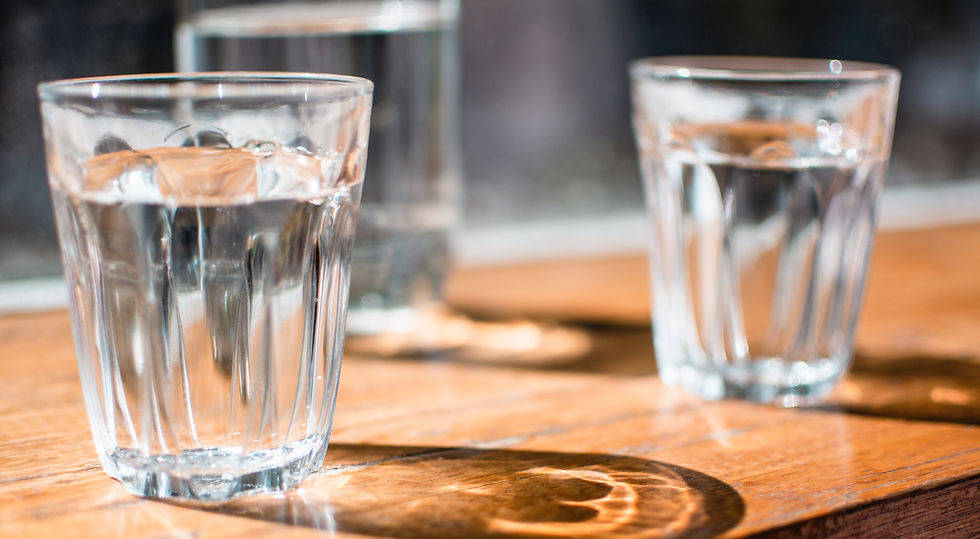
I taught a class at the PARC (Panhandle Adult Rebuilding Center, Amarillo’s outreach for people experiencing homelessness in our city) recently on a question we’ve all heard before: Is the glass half empty or half full? But as I was preparing, I realized the real question isn’t about optimism or pessimism at all. The glass is always full. The question is: what is it full of?
I went in that day wanting to teach about perspective, but then I realized I needed to ask them about their perspective. So I asked them to define what empty means to them, and the room filled with real answers.
Less than. Lacking. Poor. Hopeless. Drained.
I watched them recognize themselves in those words, and I realized many of them had let empty become their identity. That was the thing that struck me most—not that they were living without, but that the ‘without’ had become who they believed they were.
I had a full bottle of water and an empty one sitting on the table, and as we worked through definitions, I noticed something else. There was this undercurrent of feeling that people like me, people who’ve never experienced homelessness, don’t understand them and that we judge them, and in that judgment we shame them for their situation.
That’s when I asked about full. What does full look like to you? I heard words like stuffed. Uncomfortable. One person talked about being so full your clothes don’t fit you. And that’s when something clicked for me too.
We spend so much of our lives focused on what we don’t have that when we actually have abundance—whether it’s blessings or material things—it makes us uncomfortable, and then we complain about being uncomfortable because we have too much of what we wanted. It’s a strange place to exist, being full of the wrong things, being full of things we shouldn’t be full of.
God talks about emptying ourselves out, about dying to ourselves, about surrendering. But He also talks about being filled with living water and never running dry. The thing I’ve learned is that when I’m pouring my time and my gifts and my skills into places where God’s blessing isn’t, that’s where I become exhausted. But when I’m living in His purpose, my battery stays full. I might be physically tired, but emotionally I’m full and ready to move forward again.
It’s like what Dan Sullivan and Benjamin Hardy talk about in 10x Is Easier Than 2x—when you’re working in your genius, in the place where you’re designed to operate, you don’t run down.
The problem is we often become full with things we shouldn’t be. We hang on to resentment, to shame, to expectations, to stuff, to the wrong relationships, to ego-based fulfillment. A lot of times what we call disruption is just God tipping over the glass so He can empty out our self-focused desires, because the glass was full of the wrong thing. He prunes away what’s dead in our lives because He doesn’t want to leave us full of what makes us feel empty, He is making room for what actually fulfills us.
The half empty, half full mindset so many times reflects the fact that the other half of our glass is filled with unfulfilling things, like empty calories. I find myself sometimes eating so fast I get the hiccups, eating so much my body can’t even recognize when I’m full until I’ve eaten too much. But when you understand how to live a life that’s actually overflowing, you realize it’s not about being uncomfortably full. It’s about pouring as you’re filling. You’re giving away what you’re receiving. That creates this abundance that doesn’t feel heavy, it feels like movement.
What happened in that classroom surprised me. I went in thinking I’d help them think differently about their situation, but they helped me understand something. Several of them started talking about recognizing the spirit of God living in them, and even in their poverty and emptiness, they found purpose in incredibly difficult circumstances. They weren’t looking for their identity in what they had or didn’t have anymore. They were looking for it in who they are for others.
Every single time I teach, this happens. I come in as the guide thinking I’m the one with answers, and I leave having learned something that changes how I understand my own life. This time, they reminded me that the best kind of full is when you’re living less for yourself and more for others, when you have less clutter and less ego, and more clarity about what God is providing and how you live a life of blessing others.
It makes me think of Mother Teresa. Her feet were horribly deformed, gnarled and twisted and missing nails—this really moved me when I learned the whole story. When the Missionaries of Charity would receive shipments of donated shoes, she would dig through and choose the worst pair for herself, leaving the better ones for the people she served. She did this for decades, and her feet paid the price. She was willing to be uncomfortable to the point where it actually crippled her, because her purpose was to serve others so completely that their shoes fit even when hers didn’t.
That’s what living a life that’s filled to overflowing actually looks like. Not comfortable. Not easy. But full of something that matters.


Comments